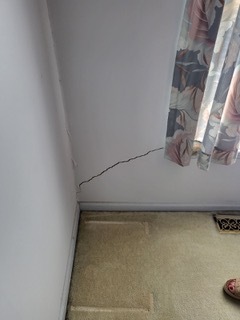
- What’s done during the Structural Part of a Routine Home Inspection? We visually inspect all accessible structural components, like the foundation, house framing (joists, beams, etc.), roof structure, and other exposed elements. But here’s the thing: what we can’t see, we can’t assess – drywall and finishes conceal much of the house structure, which limits what can be detected.
- Limitations of a Routine Inspection: Even the most thorough inspector can’t see through walls, so there’s often more than meets the eye. That’s where the Advanced Structural Assessment (ASA) comes in.
- How the ASA Helps: Using specialized tools like a laser level, ASA Certified inspectors take precise measurements of the house’s structure. This deeper dive often uncovers issues not visible to the naked eye and can give us a much clearer picture of what’s really going on.
- Beyond “It’s Just an Old House”: Say you’re looking at an 80-year-old home. A routine home inspection might note that the floors slope a bit – which is typical for older homes – and leave it at that. But not all floor slopes are created equal. With an ASA, we measure precisely how “off” those floors are, and exactly where they’re sinking.
- The Results Matter: About 30% of the time, what we find isn’t just “character” – it’s an actual structural concern. That data allows our engineers to distinguish between quirks of an older house and real issues that need attention. Most ASA’s serve to demonstrate that the house is structurally sound, which gives you peace of mind. However, the most commonly found issues are foundation failures and joist failures – which you definitely want to be able to budget for before signing on the dotted line.
- ASA’s are Valuable for Any Home: Generally speaking, an ASA is more beneficial the older the house is – AND, we have found $30,000+ structural issues in houses that are only a few years old. Whether buying, selling, or simply wondering about your current home, an ASA and can give you peace of mind.
- The ASA Report: You’ll receive a structural engineering report about two days after the ASA is performed.




11TH
COVID
DECK
ELECTRICAL

EXTERIOR

HOME

HONOR

INTER
MULTI
moisture intrusion inspector

RES
ROOF i

SAFE
STRUCTURE